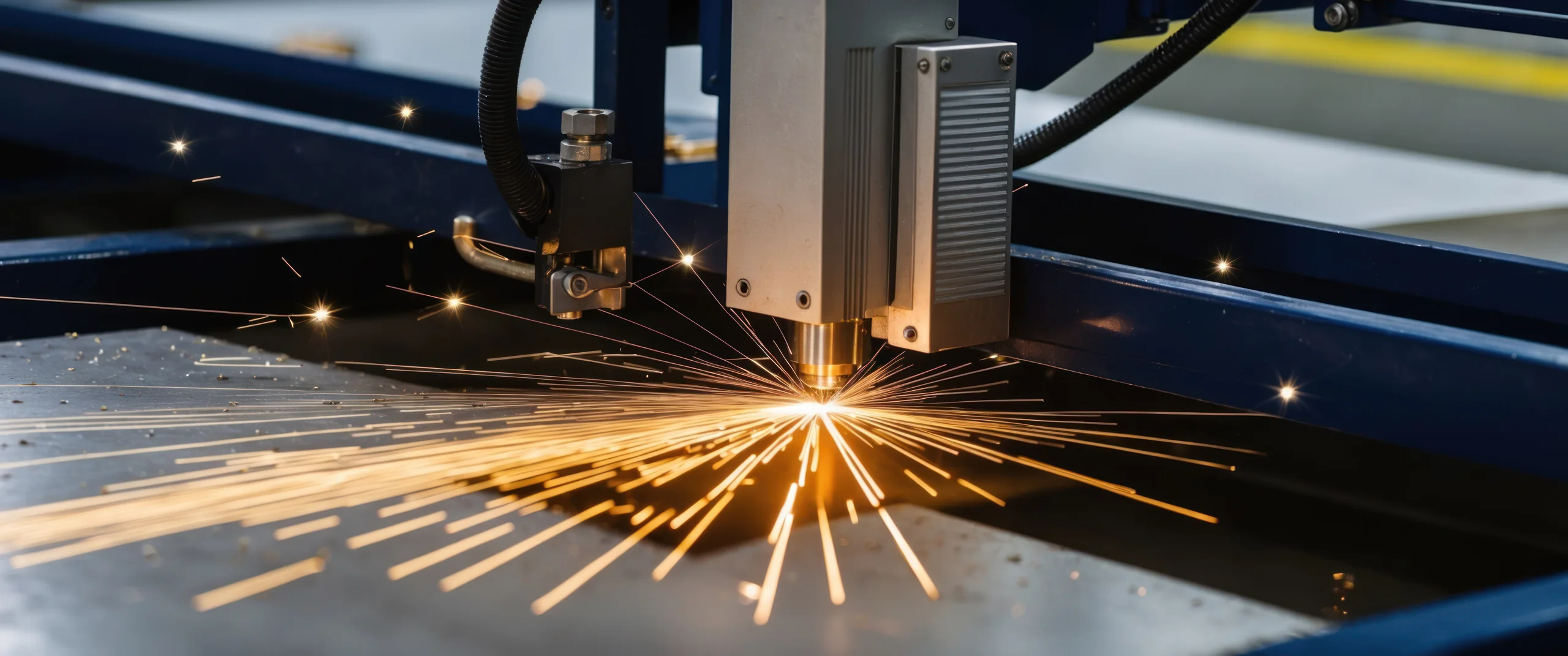
Precision Medical Metal Laser Cutting OEM: the Preferred Manufacturing Choice for Core Components Including Endoscope Bending Sections and Hypotubes
Home 〉Blog 〉Precision Medical Metal Laser Cutting OEM: the Preferred Manufacturing Choice for Core Components Including Endoscope Bending Sections and Hypotubes
Precision Medical Metal Laser Cutting OEM: the Preferred Manufacturing Choice for Core Components Including Endoscope Bending Sections and Hypotubes
21 июня 2026 г.
Every endoscope, guidewire and microcatheter starts with unassuming metal tubes and thin sheets. Before these components reach patients, one single step determines product success: machining tolerances held strictly within 0.01–0.02 mm. For this very reason, more and more endoscope OEMs and medical device manufacturers are abandoning traditional mechanical machining and turning to professional medical laser cutting outsourcing services.
If you are sourcing a supplier for endoscope bending sections, hypotubes and ultra-thin precision parts, this article covers two key points: why medical metal laser cutting is irreplaceable, and how to select a reliable laser cutting processor.
Why Medical Laser Cutting Outperforms Traditional Mechanical Machining
Laser cutting has become the mainstream process for precision medical components for one core reason: it is a non-contact machining method. Traditional sawing and milling apply mechanical force to thin-walled tubes, resulting in deformation, burrs and large heat-affected zones that compromise material performance.
Core Advantages of Medical Device Laser Cutting
1. Smooth cutting edges with no burrs; no secondary deburring required
2. Minimal heat-affected zone (HAZ); corrosion resistance of 316L and Nitinol remains intact
3. Micron-level repeatability, ensuring consistent quality across mass production
4. For thin-walled micro geometries, laser cutting outperforms other processes in both speed and batch consistency.
Endoscope bending sections are the most rigorously specified parts in flexible endoscopes. They must withstand tens of thousands of bending cycles with smooth articulation, while maintaining tight tolerances even when wall thickness is reduced to 0.05 mm.
A qualified bending section manufacturer must strictly control three key criteria:
- Tube geometry: outer diameter starting from 0.85 mm, minimum wall thickness down to 0.05 mm
- Cutting quality: laser-cut slots free of burrs to prevent abrasion of internal traction wires
- Batch consistency: uniform bending feel across every single component with full repeatability
When developing new endoscope models, always confirm with your laser cutting vendor whether they fabricate full-length bending sections or only supply cut tubes. This directly determines the post-assembly risks you will face.
Hypotubes & Laser Tube Cutting: Critical Components for Interventional Devices
Hypotubes—the thin yet rigid metal tubes inside catheters, guidewires and delivery systems—have extremely strict precision requirements that most conventional machine shops cannot meet. Typical specifications are as follows:
Laser tube cutting delivers unmatched performance for these parts: thin-walled hypotubes are cut cleanly without burrs or tube lumen deformation. When selecting a hypotube supplier, focus on only three critical questions:
1. Can outer diameter tolerance be held within ±0.02 mm?
2. Will microcracks form on Nitinol after laser cutting?
3. Can the vendor support prototype development all the way through mass production?
Micro & Ultra-Thin Precision Components: Beyond Round Tubing
Laser technology also covers non-tubular geometries. Ultra-thin metal cutting (0.01–1 mm thickness) enables high-precision slicing, slotting and profile blanking for applications including:
- Semiconductor packaging and chip carriers
- Optical components
- Micro-structured parts for medical and precision assembly
Laser micromachining delivers minimum feature sizes down to φ0.03 mm and wall thicknesses as thin as 0.01 mm, becoming the only viable solution for micro-parts that cannot be processed with conventional cutting methods.
Practical Checklist for Selecting OEM Laser Cutting Contract Manufacturers
These verification criteria apply equally to domestic procurement and overseas outsourcing of medical component machining:
1.Quality control system: Complete incoming, in-process and outgoing inspection protocols; traceable batch records and formal test reports available on demand.
2.Process capability: Submit your actual drawings for prototyping; inspect burrs, heat-affected zones and dimensional stability under a microscope.
3.Material coverage: Prefer a single manufacturer that can process 316L stainless steel, Nitinol and L605 cobalt alloy, eliminating the need to qualify multiple suppliers for different materials.
4.Production scalability: Support low-volume prototyping as well as large-batch customized production; validate sample quality before full-scale mass production to avoid repeated supplier certification.
5. Engineering support: A responsive technical team from drawing review to mass production can cut months off your trial-and-error development cycle.
From endoscope bending sections and hypotubes to ultra-thin semiconductor-grade precision parts, precision medical metal laser cutting is the unsung cornerstone behind minimally invasive medical technology.
A reliable outsourcing partner does not merely cut metal. They strictly adhere to your design tolerances, scale up with your production volume, and deliver consistent quality from the first prototype to global mass shipments.
Свяжитесь с нами
Запустите ваш проект прецизионной обработки медицинского металла
Компания с сертификатом ISO13485 и чистым помещением класса 10 000 предлагает комплексную лазерную обработку гибких сегментов эндоскопов, гипотрубок и прецизионных полупроводниковых деталей — от оптимизации конструкции до серийных поставок.