Structural Analysis of Superelastic Nitinol Integrated Bending Hinge for Single-Use Endoscopes
Home 〉Blog 〉Structural Analysis of Superelastic Nitinol Integrated Bending Hinge for Single-Use Endoscopes
Structural Analysis of Superelastic Nitinol Integrated Bending Hinge for Single-Use Endoscopes
19 октября 2026 г.
Minimally invasive endoscopic surgery has revolutionized modern medicine. Taking Germany as an example, more than 6 million gastrointestinal endoscopic examinations are performed annually. As a core functional component of the endoscope, the endoscope bending section is critical in clinical diagnosis and treatment. Currently, clinically deployed endoscopes feature complex structures and high costs, and the instruments are reused. Even after thorough cleaning and disinfection, the risk of cross-infection remains. To address this pain point, Single-Use Instruments (SUI) have become an industry trend. Single-use endoscopes impose requirements on functional components such as the endoscope bending section: simple structure, controllable cost, and ease of machining and assembly.
Commercially available endoscopes with an outer diameter of 10 mm adopt conventional endoscope bending sections composed of multiple cylindrical monomers connected by rivets / cylindrical lugs to form a sliding hinge structure. The base material is mostly biocompatible stainless steel.
Traditional riveted endoscope bending sections have obvious drawbacks: a large number of discrete parts and complicated assembly procedures raise manufacturing costs; riveting clearances introduce axial and rotational backlash and reduce steering control accuracy; the mechanism lacks an inherent home position, so the bending joints cannot reset autonomously.
A monolithic Nitinol flexible hinge structure can solve the above pain points. The integrated hinge requires no assembly, features zero friction, zero wear and zero motion clearance, and can be directly fabricated from blank tubes in one step via laser tube cutting. No secondary assembly is needed, making it highly suitable for cost-sensitive single-use endoscopes.
Extensive research has been conducted globally on flexible bending hinges for endoscopes. Howell proposed the general design methodology for compliant mechanisms. Coemert et al. optimized stress distribution of flexible hinges to improve fatigue life, but their solution was not adapted to Nitinol superelastic materials. Multiple Nitinol flexible actuators have been reported in existing literature: EDM-segmented Nitinol hinges for frontal sinus surgery, single-plane bending Nitinol nested-tube manipulators. However, most of these only support deflection in a single plane and cannot achieve the 3D spherical motion capability of modern flexible endoscopes (≥ ±90° bending angle). Conventional biocompatible alloys such as stainless steel cannot sustain the large reversible deformation required by the hinge.
Nitinol alloy has nearly equal atomic proportions of nickel and titanium, an austenite/martensite dual-phase crystal structure, shape memory effect and excellent superelasticity. It can achieve 6–8% reversible strain, making it an ideal substrate for bending components of single-use endoscopes. Tuning the Ni/Ti ratio allows adjustment of phase transformation temperature. The material’s biocompatibility has been verified by numerous in-vitro and in-vivo experiments and it is widely used in high-end medical implants and minimally invasive instruments. Multiple superelastic constitutive models for Nitinol have been established in academia and can be imported into ANSYS and ABAQUS for finite element simulation.
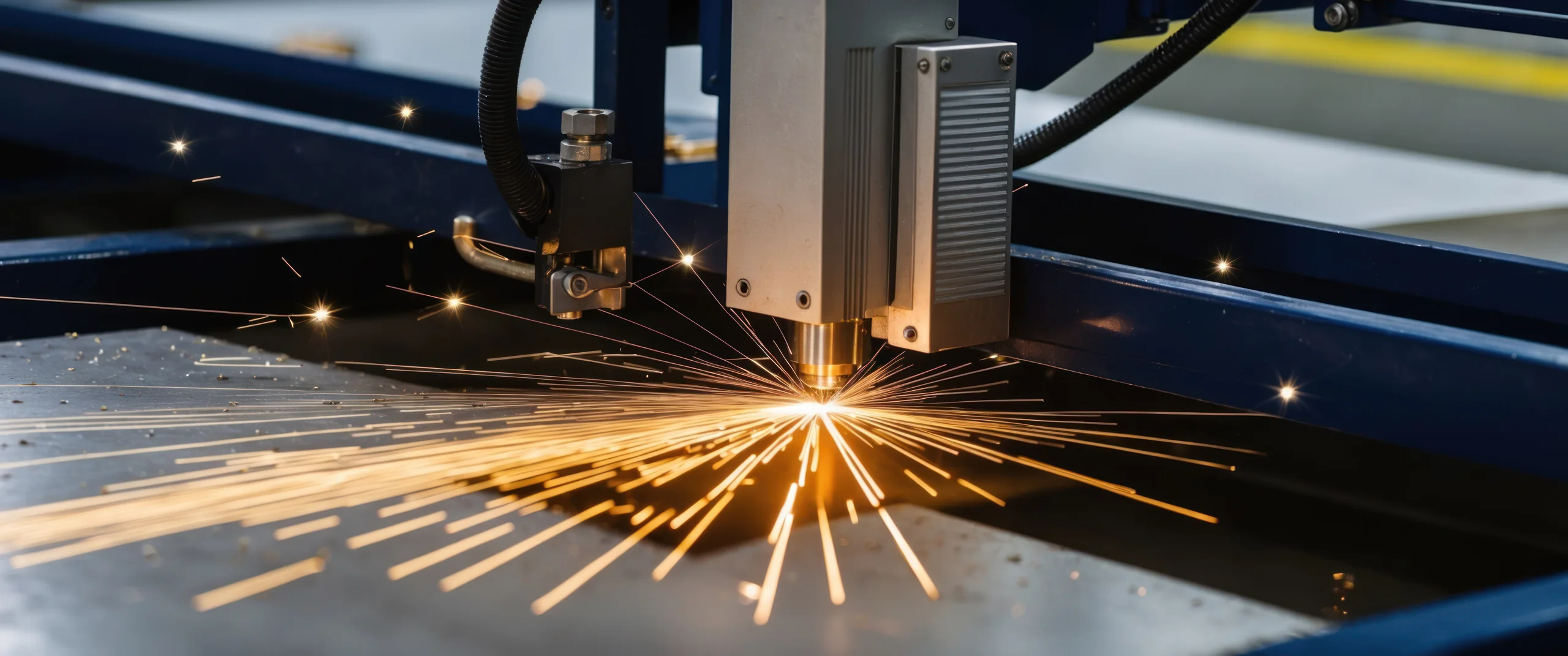
Nitinol features high hardness and thermal sensitivity; conventional mechanical machining tends to degrade the material’s mechanical properties. Ultra-short pulse laser cutting (picosecond / femtosecond laser) of Nitinol tubes produces an extremely small heat-affected zone, fully preserving the material’s microstructure and mechanical properties. It is the preferred process for fabricating monolithic Nitinol bending sections.
In terms of endoscopic bending actuation, Nitinol is often used as a shape-memory actuating element. Nitinol wire, Nitinol spring and Nitinol leaf spring schemes have been widely studied, yet most suffer from complicated assembly, high control difficulty, and the need for insulation / cooling accessories.
The monolithic Nitinol bending section is integrally manufactured by laser cutting Nitinol tubing for single-use minimally invasive endoscopes. Compared with traditional stainless steel riveted endoscope bending sections: the required actuation pulling force can be reduced by 50%, and the inner lumen diameter increases by approximately 10%, reserving ample space for internal cables and channels inside the instrument. The mechanism comes with an inherent home reset position and operates without axial play or frictional loss. Axial preload induced by the Nitinol actuator must be fully evaluated during the design phase. Limited by the cylindrical bulk geometry, this monolithic solution cannot achieve the minimal bending radius of traditional riveted bending sections (the conventional riveted bending section itself is not designed for Nitinol actuation).
Свяжитесь с нами
Запустите ваш проект прецизионной обработки медицинского металла
Компания с сертификатом ISO13485 и чистым помещением класса 10 000 предлагает комплексную лазерную обработку гибких сегментов эндоскопов, гипотрубок и прецизионных полупроводниковых деталей — от оптимизации конструкции до серийных поставок.